Capacity development

Training that survives contact with the field

Blended and simulation-based learning for project teams, delivered in English, Urdu and Pashto, and in our other working languages for international programmes. Over 400 professionals trained and mentored to date.

Why our training differs

Taught by people who still do the work

Our trainers are practising consultants, not full-time instructors. The case material comes from assignments we have actually delivered, including the ones that were difficult.

Training is delivered in the language your team works in. That matters more than it sounds: technique learned in a second language tends to stay theoretical, and the questions that reveal whether someone has actually understood it rarely get asked. We teach in Urdu and Pashto because that is where the discussion opens up.

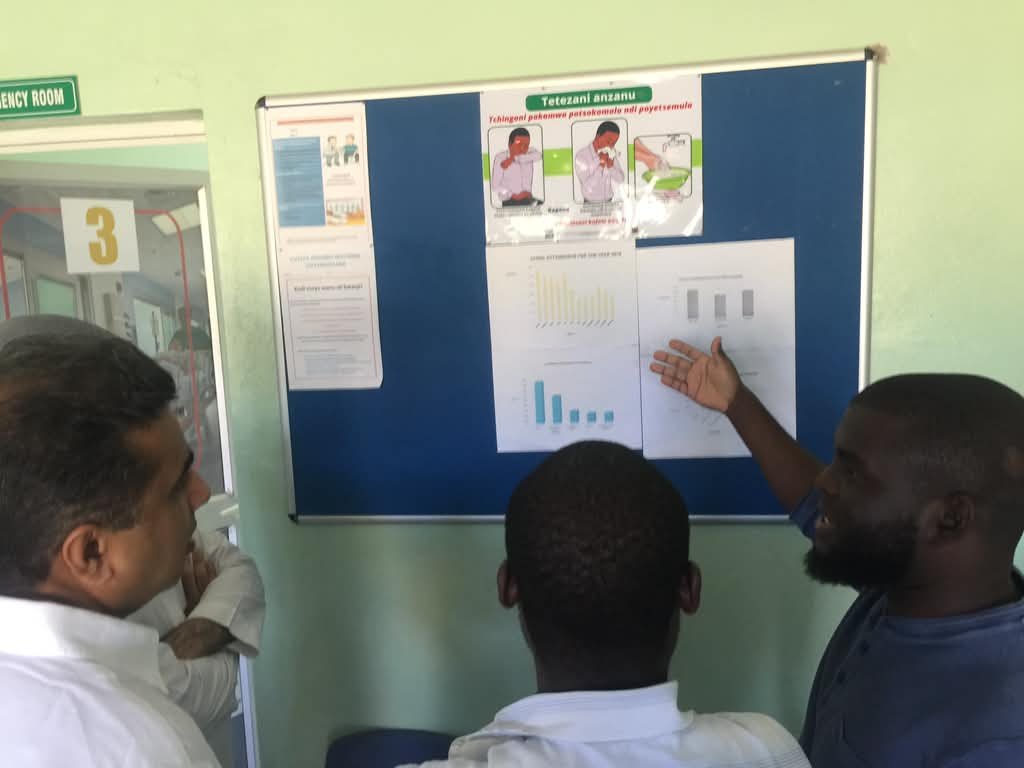
PMEye consultant and health facility staff reviewing service data charts pinned to a notice board at a health facility in Malawi
Reviewing facility service data with health staff, Malawi. The people who teach the method are the people who use it.
Programmes

What we teach

Delivered as open courses, in-house programmes for a single organisation, or embedded coaching alongside a live project.

Track 01

Hard skills

The technical core of running a project properly.

  • Project management across the full cycle
  • Results-based planning and logframe design
  • Monitoring, evaluation and indicator frameworks
  • Data systems and digital data collection
  • Budgeting, work planning and risk management
  • Proposal development and donor compliance
Track 02

Soft skills

What determines whether the technical skills get used.

  • Leadership and team management
  • Communication and stakeholder engagement
  • Teamwork and collaborative problem solving
  • Emotional intelligence in high-pressure contexts
  • Negotiation and difficult conversations
  • Facilitation and workshop delivery
How it is delivered

Four formats

01

Open courses

Scheduled programmes that individuals and small teams can join, run from Islamabad.

02

In-house programmes

Designed around one organisation's projects, systems and constraints, delivered on site.

03

Simulation-based learning

Project management games and case-based workshops where teams make decisions and see consequences.

04

Coaching and mentoring

Embedded support alongside a live project, with structured knowledge transfer to your own staff.

In the field

Training where the work actually happens

A large part of what we teach is delivered in the districts, to the field staff who collect the data and write the first account of what a donor eventually reads. That is deliberate.

Two things go wrong when field teams are left out of training. Data comes back inconsistent, because the people gathering it were never shown why a question is worded the way it is or what a good answer looks like. And proposals get written at a distance from the community, so they satisfy the donor's framework while the problem actually in front of the field team goes missing from the text.

We train for both at once. Field staff learn to collect data that holds up to scrutiny, and to write in a way that meets the donor's requirements while keeping the real community problem visible on the page. The two are not in tension: a proposal grounded in what the field team has genuinely seen is usually the more fundable one.

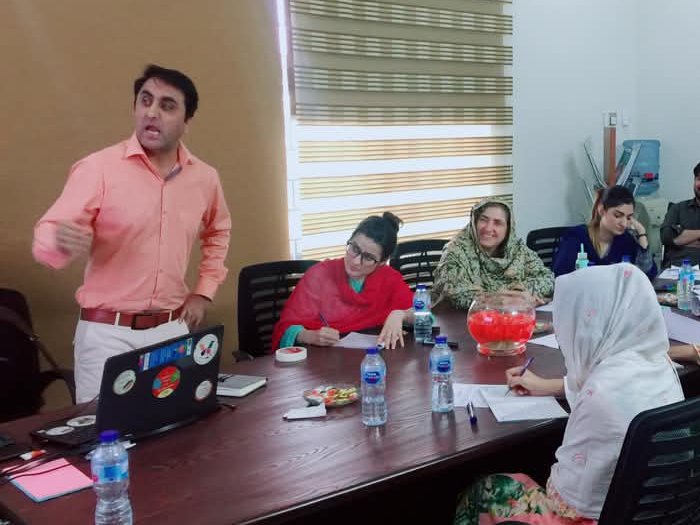
PMEye trainer standing and presenting to programme staff seated around a conference table, taking notes, during a project management training in Peshawar
Three-day project management training for programme staff, Peshawar.
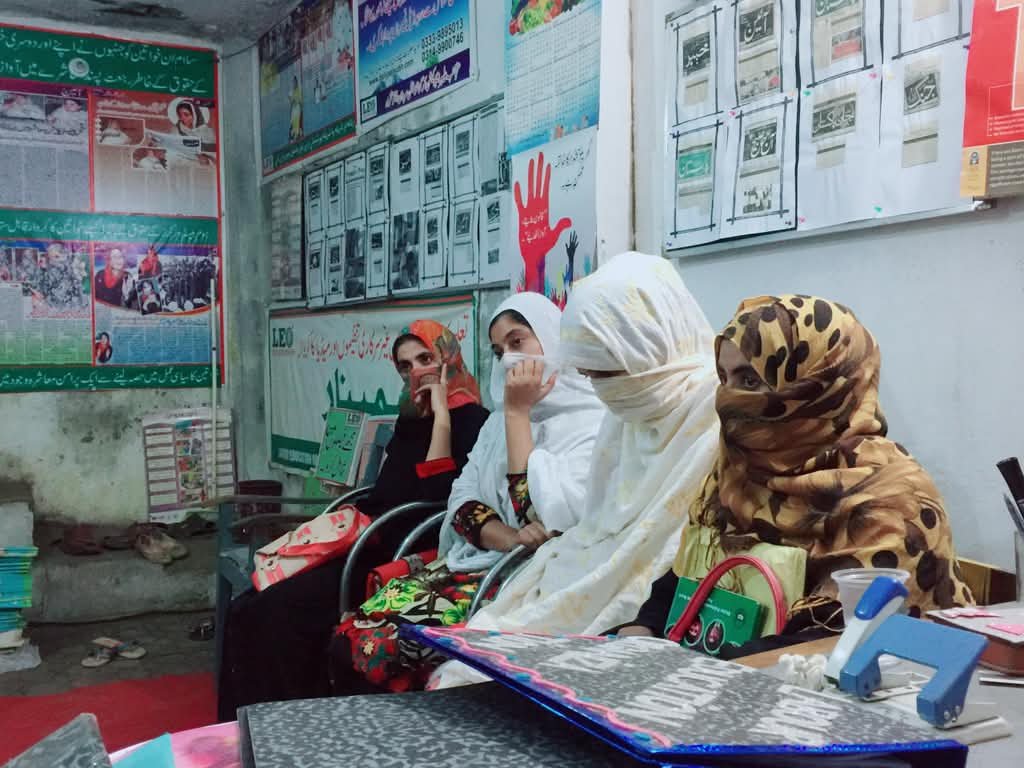
Women field staff seated together during a proposal writing training in a Labour Education Organization office in Mardan, with campaign material on the walls behind them
Proposal writing training for women field staff, Mardan.
Peshawar

Project management for programme staff

A three-day project management programme for the staff of Blue Veins, covering planning, scheduling, risk and the discipline of recording what actually happened.

Mardan

Proposal writing for women field staff

Technical training for the women field staff of Labour Education Organization, where PMEye acts as technical mentor: turning field observation into proposals that answer the donor and describe the community accurately.

Certification

Recognised certification pathways

Preparation programmes aligned to the credentials donors and employers actually recognise.

We prepare candidates for internationally recognised project management certifications and support them through application, study and examination. Our founder holds both PMP® and Project DPro credentials and teaches on these pathways directly.

Certification is awarded by the respective certifying bodies. PMEye provides preparation, coaching and examination support.

PMP®

Project Management Professional preparation, aligned to PMI standards.

Project DPro

Project management for the development and humanitarian sector, including structured project governance and controlled-environment methods.

Bespoke pathways

Blended routes built around your team's existing credentials and gaps.

Flagship pathway

PMP® exam preparation

The Project Management Professional is the most widely recognised project management credential in the development sector, and increasingly a stated requirement in donor and government terms of reference.

Are you eligible?

PMI sets four routes to the exam. Every route also requires 35 contact hours of project management education, unless you already hold the CAPM® certification.

  • Four-year degree36 months leading projects
  • Associate / technical48 months leading projects
  • Secondary diploma60 months leading projects
  • GAC-accredited degree24 months leading projects

Unsure which route applies to you? We review eligibility before you commit to a course.

What the exam looks like

Three domains, tested through situational questions across predictive, agile and hybrid approaches.

  • Questions180
  • Time allowed240 minutes
  • People33% · leading and building teams
  • Process41% · the technical work of delivery
  • Business environment26% · strategy, compliance, benefits

What our preparation covers

01

Eligibility and application

We check your route, help you document your project experience the way PMI expects it, and support the application itself, the stage most candidates stall on.

02

Full domain coverage

People, Process and Business Environment, taught through predictive, agile and hybrid delivery rather than one methodology in isolation.

03

Situational exam technique

The exam tests judgement, not recall. We drill the reasoning behind situational questions, which is where well-prepared candidates still lose marks.

04

Mock exams with review

Timed practice under exam conditions, followed by a walk-through of every wrong answer and why the correct option was correct.

05

Development-sector context

Worked examples from donor-funded programmes rather than construction and IT, so the material maps onto the work you actually do.

06

Taught by a PMP holder

Our founder holds the PMP and Project DPro credentials and teaches on this pathway directly, alongside 19 years of frontline programme delivery.

Eligibility and exam details reflect PMI's published criteria at the time of writing and are provided as general guidance. Confirm current requirements at pmi.org before applying. PMP, CAPM, PMI and PMBOK are registered marks of the Project Management Institute, Inc.

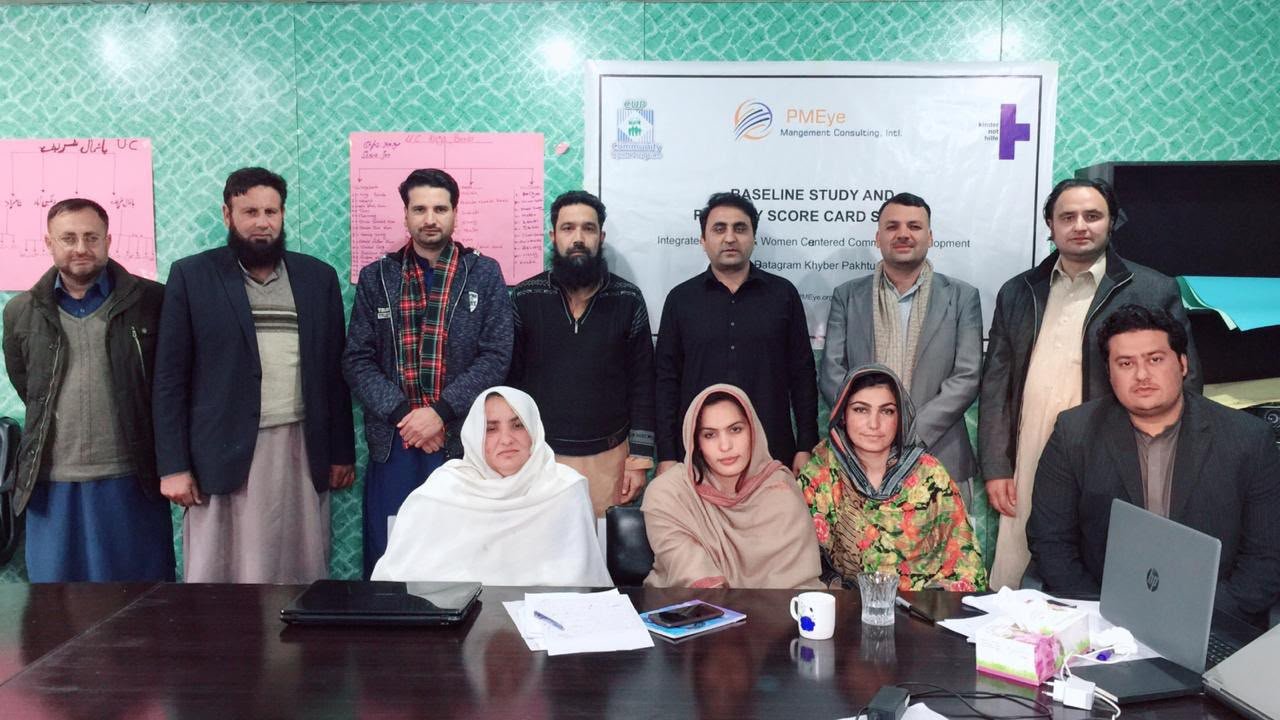
Enumerator training group with PMEye and partner banners on the wall, men standing and women seated at a conference table, Batagram
Enumerator training for the Batagram baseline study. The Centre is being built to give training like this a permanent home.
Islamabad

Centre of Excellence for Project Innovation

A physical and virtual lab for practitioners across South Asia and beyond.

  • Simulation-based learning studios
  • Certification pathways under one roof
  • Research collaborations with universities and INGOs
  • Live, multilingual masterclasses and coaching clinics
  • Remote advisory support for alumni teams

The Centre is being established as part of PMEye's 2025–2027 growth agenda. Contact us for current programme availability.

Practical questions

Before you enrol a team

What languages is training delivered in?

Cohorts in Pakistan run in English, Urdu and Pashto. International programmes are delivered in our other working languages: Arabic, French, German, Swahili and Chichewa. Mixed-language cohorts are common, and materials can be provided in more than one language for the same programme.

Can you run a programme in-house for our organisation?

Yes, and it is usually the better option for teams of six or more. We build the case material around your actual projects, systems and reporting requirements rather than generic examples.

Do you deliver remotely?

Yes. Live multilingual masterclasses and coaching clinics run remotely, with simulation exercises adapted for online delivery. Blended formats combining remote study with an in-person workshop tend to work best.

Who are the trainers?

Practising consultants from our senior specialist pool, not full-time instructors. They bring case material from assignments they have delivered themselves.

How do we get pricing and dates?

Contact us with your team size, preferred language and the skills gap you are addressing. We will come back with format options, dates and a quotation.

Capacity development

Tell us what your team needs to be able to do

We will propose a format, a language of delivery and a timeline, for one person or an entire programme team.